
Sun Damage and Photoaging Treatment in NYC
Spots, rough texture, uneven tone, fine lines and a leathery look are often blamed on “getting older.” In many cases, the real cause is years of sun exposure, specifically starting in our youth! This is called photoaging, and the good news is that much of it can be improved. Here is how sun damage is approached, what treatments are available, and why any spot that concerns you should be checked by your dermatologist first.
What is photoaging?
Photoaging is skin damage caused by repeated exposure to ultraviolet (UV) light from the sun and tanning beds. Unlike natural aging, which is driven by time and genetics, photoaging builds up with every unprotected hour outdoors. It is common in New Yorkers who have spent summers at the beach, on rooftops or on city sidewalks, and UV reaches the skin on cloudy days and through windows too.
Signs of sun damage
- Brown spots, freckles and age spots (solar lentigines)
- Uneven skin tone and blotchy redness
- Fine lines and deeper wrinkles
- Rough, dry or leathery texture
- Visible small blood vessels
- Rough, scaly patches that may be precancerous (actinic keratoses)
- Pale yellowish to grey discolored bumpy skin especially around the mouth, chin and inner lower cheeks which Dr. Shelton refers to as having a cobblestone-like appearance.
Some of these changes are only cosmetic. Others can be early warning signs of skin cancer, which is why any new, changing or non-healing spot should be checked by your dermatologist.

See your dermatologist first if you have a concern
Sun damage and skin cancer can look alike, and treating a suspicious spot as a simple age spot can delay diagnosis. Dr. Shelton’s practice focuses on cosmetic and procedural treatments and does not provide general dermatology care or skin checks. If you have a spot or lesion you are worried about, please see your dermatologist before scheduling a cosmetic treatment. If anything about your skin needs to be evaluated by a dermatologist before laser or other treatment, Dr. Shelton will let you know.
Photoaging treatment options
The right plan depends on your skin type, the kind of damage and your downtime. Options commonly used for sun damage include:
Daily sun protection and skin care. Broad-spectrum sunscreen (SPF 30 or higher), protective clothing and shade prevent further damage. Retinoids and antioxidant serums can improve texture and tone over time and these are commonly used by many patients. In the last few years Dr. Shelton has seen very good improvement in the skin’s appearance by his patients who use either ALASTIN® or DefenAge® skin care line when done in conjunction with in-office treatments, which are listed below:
- Chemical peels. A controlled peel removes damaged outer layers to improve rough texture, fine lines and some pigment. Peels range from light to deeper, with downtime that matches.
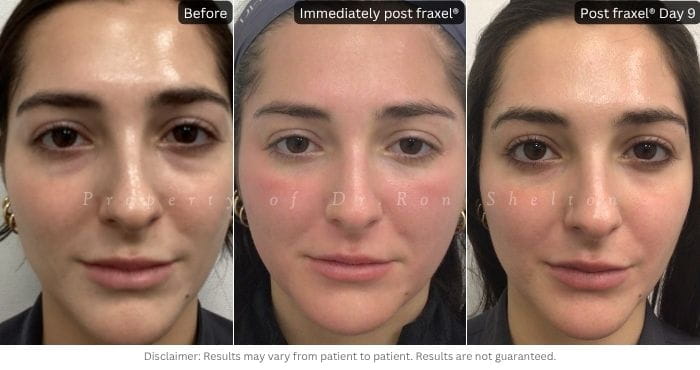
- Fractional non-ablative lasers such as Fraxel® Dual which improve collagen and surface irregular pigmentation.
- Sofwave® and Ultherapy focused ultrasonic skin tightening.
- Microneedling with Radiofrequency and off-label topical application of Sculptra®. Tiny controlled punctures trigger the skin’s repair response and can soften texture and fine lines.
- Botulinum toxin injections which can improve skin texture.
- Fractional ablative carbon dioxide laser to improve wrinkles and surface texture and induce some tightening.
- Fully ablative erbium laser for the deepest wrinkles.
Injectables. Neuromodulators and fillers can soften lines and restore volume that sun and age have changed.
What to expect from treatment
A first visit usually covers your skin history, sun exposure and a discussion of your goals. Dr. Shelton will then recommend a plan, often combining daily care with one or more in-office treatments. Results build gradually. Most people see better tone and texture over weeks to months, and maintaining results depends largely on protecting your skin from further sun.
Common questions
Can sun damage be reversed?
Should I have a spot checked before cosmetic treatment?
How many treatments will I need?
Is there downtime?
How can I prevent more damage?
Book a sun damage consultation in NYC
If you’re noticing spots, rough patches or skin that looks older than it should, and any concerning spots have already been cleared by your dermatologist, a consultation with Dr. Ron Shelton is a good next step. Call (212) 593-1818 to book.
Disclaimer: Individual results vary. All treatments carry risks, which will be reviewed during your consultation
Visit Photo Gallery
Page updated: Nov 2026