
CO2 Laser Resurfacing for Lower Eyelid & Upper Cheek Skin in NYC
As skin ages, collagen production naturally slows — a process accelerated by years of sun exposure and repeated facial movement. The result is often thinning, crepey skin around the delicate lower eyelid and upper cheek area, one of the first places visible signs of aging tend to appear. For patients in NYC looking to improve the elasticity and texture of this region, CO2 laser resurfacing has become one of the most effective non-surgical options available.
How CO2 Laser Resurfacing Works
CO2 laser resurfacing is an ablative treatment that uses concentrated light and heat energy to remove damaged outer layers of skin while simultaneously stimulating new collagen production in the deeper dermal layers. As the body reacts to this controlled treatment by healing the tissue and creating new skin, patients often see a visible tightening and smoothing effect as new, healthier skin cells replace the old.
This dual action — resurfacing the outer layer while triggering collagen renewal underneath — is what makes CO2 lasers particularly effective for improving elasticity in thin-skinned, expressive areas like the lower eyelids and upper cheeks, where fine lines and looseness tend to be most noticeable.
CO2 Laser Resurfacing for Lower Eyelid and Upper Cheek Skin:
A Real Patient Result
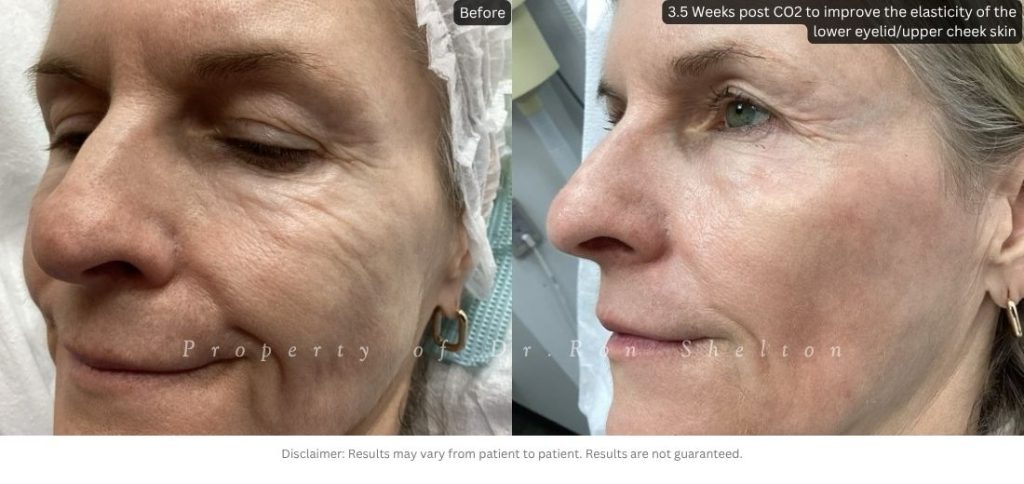
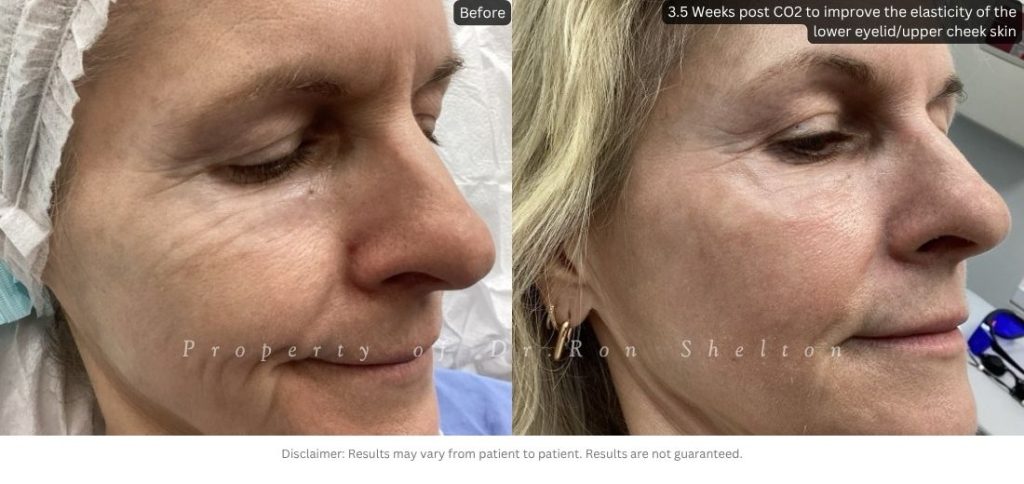
One recent patient in NYC sought treatment specifically to improve the elasticity of her lower eyelid and upper cheek skin. Just 3.5 weeks after a single CO2 laser session, the improvement in skin texture and tightness was already visible — a timeline that reflects how actively the skin continues rebuilding collagen well beyond the initial healing period.
Ablative vs. Non-Ablative: Choosing the Right Approach
Not every patient needs the same intensity of treatment. Laser resurfacing generally falls into two categories: ablative and non-ablative. Ablative lasers remove the skin’s top layer, while non-ablative lasers work by heating underlying tissue to trigger new collagen production without affecting the surrounding skin. The fractional, non-ablative approach typically allows for faster healing than a fully ablative treatment.
Recovery time depends on the strength and type of laser used, with fractional treatments generally requiring less downtime than fully ablative ones — ranging anywhere from a few days to about two weeks. Choosing between these approaches depends on the severity of skin laxity, sun damage, and each patient’s individual goals and lifestyle.
Why Patients Choose Dr. Ron Shelton, One of NYC's Best Dermatologists for Laser Resurfacing
Dr. Ron Shelton is widely regarded as one of the best dermatologists in NYC for advanced laser skin resurfacing, with a practice built on precision, individualized treatment planning, and years of hands-on experience with a wide range of laser technologies. Rather than applying a one-size-fits-all approach, Dr. Shelton evaluates each patient’s skin type, degree of sun damage, and cosmetic goals before recommending whether an ablative or non-ablative laser — or a combination approach — will deliver the best results.
His deep familiarity with advanced systems, including Erbium ablative lasers, allows him to calibrate treatment depth and intensity with a level of precision that helps minimize downtime while maximizing collagen stimulation. This is especially important in sensitive, thin-skinned areas like the lower eyelid and upper cheek, where over-treatment can cause complications and under-treatment can mean disappointing results.
Beyond his clinical expertise, Dr. Shelton has authored published books on cosmetic dermatology topics including Botox® and liposuction, reflecting a career-long commitment to patient education. Patients in NYC considering CO2 laser resurfacing can feel confident working with a provider whose reputation is built on both technical skill and a genuinely personalized approach to care.
Frequently Asked Questions
Can CO2 laser resurfacing improve skin elasticity around the eyes?
How soon will I see results after CO2 laser resurfacing?
Is CO2 laser resurfacing safe for the delicate eye area?
What is the recovery time for CO2 laser resurfacing?
Who is a good candidate for this treatment?
Ready to Improve Your Skin’s Elasticity?
Find out if CO2 laser resurfacing is right for you by calling Dr. Ron Shelton’s NYC office at (212) 593-1818, or book a consultation online
Disclaimer: These patients demonstrate results unique to their case and no patient can be guaranteed excellent results.
Visit Photo Gallery
Page updated: Sept 2026